


Insight into Politics in Wales
I’m on a rugby tour in Wales. After our last game yesterday, my teammates and I attended a festival for the team in Brecon. I was happy and jubilant, but also quite sore and a little tired. And while I was waiting in line at the concession stand, a man approached me, asking about my accent. I confirmed his suspicions of my American identity and gave a “wild” guess that he was Welsh (I was right!). What I would never have expected was that this small interaction would soon turn into a full-blown political discussion.
After we got our drinks, he and I headed for the entrance of the festival tent. He told me he was a farmer, and described some of the struggles of being one, especially now. Whether it was droughts because of the intense heat, long work days, or endless chores, the life of the farmer didn’t seem pretty. At the same time, though, he heavily emphasized how much he loved being a farmer. I asked him about certain ways to make life easier, and his very first answer was voting. He took voting extremely seriously, he said, and even though he only counted as one vote, to make sure he stayed in business he had to vote for the right candidate and policies that would benefit the agricultural aspects of Wales.
This conversation opened my eyes once again to my goal. There are people in both Wales and America who rely on voting, and yet many Americans either do not care about voting or do not know where to start. And although America isn’t agriculturally-driven as it was 300 years ago, there are different aspects of American life that need fixing. It even made me question whether the voting process itself was outdated in America—that maybe changing the way we vote or gather information about a candidate could influence more citizens to vote. I hope that when the website is up and running that it will do just that!
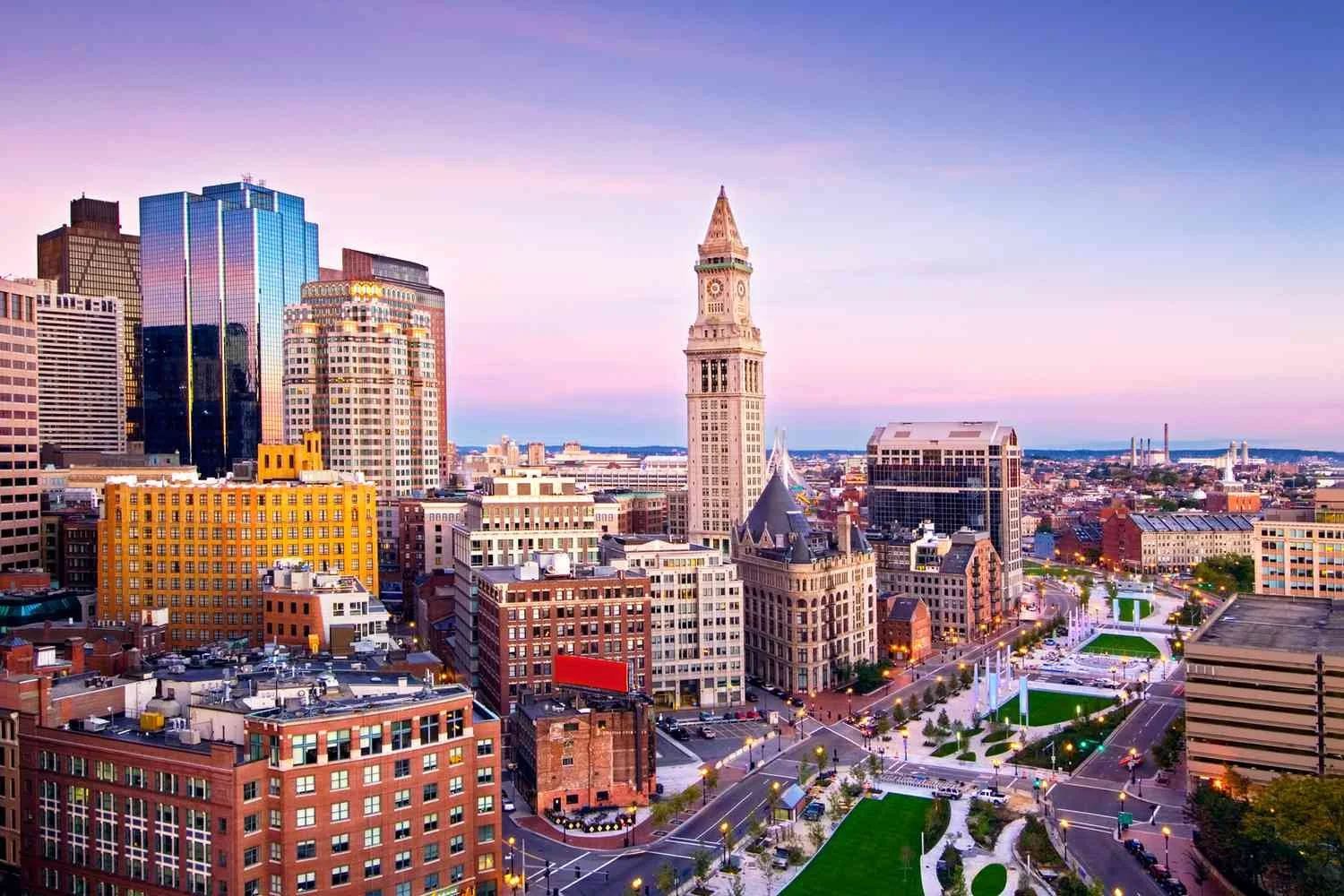
Canvassing on the streets of Boston
I helped with my first canvassing event today. Our goal was to knock on the doors of as many “super voters” (people who have voted in multiple elections in the last two to five years) as possible, seeking to find out where support for the Mayor lies. We were assigned to the Mission Hill neighborhoods of Boston, starting at a little donut shop where we met everyone, planned our route, and set up the Minivan app on our phones, an app that allows you to track the data you gather. There were seven of us working, with 12 neighborhoods to conquer; rather than taking two smaller lists, I decided to take the largest one. Once everything was set up, we said our farewells and went on our way.
My first house was a ten-minute walk from the donut shop. I knocked on the door, but there was no response, so I left a piece of literature on the door. Over time, I began to meet many voters, with mixed responses. Every person who was supportive of Michelle Wu was so welcoming and appreciative of the time I was taking to canvass—it was lovely to see how meaningful any contribution to help Mayor Wu was to them. Personally, however, I liked it most when I encountered a non-supporter or someone who was on the fence. Some people closed their doors the second I said Michelle Wu’s name, while others tried to debate me on why Mayor Wu was right for reelection. I’m proud to say that I was able to tally on the poll two new Michelle Wu voters!
What struck me most was that almost everyone I spoke with knew or had had some kind of interaction with Mayor Wu, and that she had taken the time to meet as many of her constituents as she could. I realized from this that one of the most effective things you can do as a politician is going out and making the effort to meet your voters, making them feel wanted and special, rather than sitting back and letting your speeches lead the way.
Overall, it was a great experience, and I’m looking forward to many more canvassing events in the future!
DAY 1 as a field intern
Today was my first day interning for Mayor Wu’s reelection campaign—all weekend, I was eager to start! We began with a Zoom call, as most of the work is remote for now, and I met two of my supervisors, Kevin and Sky. My task for the day was calling 100 volunteers who were registered with Mayor Wu’s campaign, to see if they were available to help out with phone banking (which is remote), or with canvassing shifts, which is when we all gather as a group and go campaigning door to door.
At first, I thought this task would take me only two hours—how hard could it be to call and register people for events? But as time ticked by, I realized that this wasn’t a quick task. I started at around 11 am, after my introduction meeting, and finally finished up by 3pm. While I had the wrong number for the first person registered, I got into a groove after my first couple of attempts. Kevin and Sky had given me a script and told me to try and stick to it—but also to make it sound like me. I was happy that I was allowed to branch out and talk even further with some people. There was one man in particular who was fun to talk to—he had told me he was a Marine and was about to receive his petition. As someone who hopes to join the military one day, I wish we had gotten into more specifics about his time serving, but I also knew I had a job to finish. I’m excited for what’s to come!
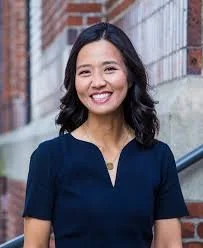
An intro to politics
I first met Mayor Michelle Wu on a rainy Wednesday afternoon in April, during a fundraising event that my father was helping to host. The event was stationed on the second floor of a restaurant, and my father and I arrived an hour early, introducing ourselves to other people joining us at the event and to members of her campaign. When Mayor Wu arrived, my father and I went down the back stairwell and out the back door to meet her outside. We watched as she got out of the car with her newborn baby in her arms, covered by a blanket. At this point, the rain started to intensify, but Mayor Wu couldn’t have cared less about the rain and made sure her baby was calm. We escorted her upstairs, and I introduced myself.
I still remember the interaction; even with her baby in her arms, it was as if I had her full attention, as if I were the most important person in the room. We talked briefly about her work in Boston, one example being her modified traffic light system, and my own interest in politics and helping with her campaign for the upcoming election in November. I had just served as my school’s Vice President, so working for the Mayor, I believed, was a great way to simply be a sponge and take in as much information as I could. She seemed appreciative of my desire to participate and suggested that I coordinate with her campaign manager, Julia.
Shortly after our conversation, Mayor Wu introduced herself at the event. As she walked in, everyone stopped what they were doing—it was as if a spotlight had been put on her. Her speech was even better. She showed how much she truly cared for every person in Boston by announcing a series of initiatives that would improve citizens’ lives, from the "futureBOS" Summer Youth Employment Program, which offers job opportunities to Boston youth and young adults ages 14-24, to reducing traffic by controlling how traffic lights work in the city. My favorite part was how modest she was, thanking almost everyone at the event, and her stage presence while she was speaking. She was so clear, so calm, and so persuasive: skills I hope I can master one day!